
Choosing Pneumatic Tube Systems for Hospitals: 7 Requirements Facilities Teams Can't Ignore

Selecting pneumatic tube systems for hospitals is not like buying a copier.
The choice you make will:
Move blood samples, meds, and documents for 10-20 years
Shape nurse and lab workflows every shift
Affect lab quality and patient safety if it isn't designed or validated correctly
Yet many RFPs still focus heavily on equipment specs and price, and much less on the requirements that determine whether the tube system hospital staff actually gets will work for real care pathways.
This article outlines seven requirements facilities, planning, and operations leaders should build into any RFP for a hospital pneumatic tube system so you don't end up with an impressive network that clinicians quietly bypass.
Design Around Clinical Pathways, Not Just Architecture
Most vendors can design a network that physically connects buildings. The real question is whether your tube system hospital design connects the right points for care.
When you specify pneumatic tube systems for hospitals, require:
Design workshops that start with your high-value flows (ED ↔ Lab, OR ↔ Blood Bank, Pharmacy ↔ ICU and wards)
Route planning based on real specimen and medication journeys, not just convenient riser locations
Station locations tested against actual nurse and lab walking patterns ("day in the life" scenarios)
Why it matters:
A hospital pneumatic tube system can look efficient on paper but still force nurses to walk long distances to stations. Systems designed only from floor plans risk underuse and weak ROI.
Read more here: "How Hospital Tube Systems Actually Work: A Guide for Operations Leaders"
Station Placement and Usability for Nurses and Lab
For frontline staff, the system is the station.
Your requirements should address:
Station density and placement on units (near nurse stations, med rooms, phlebotomy areas)
Lab-side station placement near accessioning and pre-analytical areas
Simple, consistent user interfaces and labeling across all stations
Storage and access for carriers and inserts at each station
Questions to include in your selection criteria:
How does the vendor approach station siting relative to nurse and lab workflows?
How will station layouts support packaging, labeling, and safe dispatch/receipt?
Can the system provide data by station (volume, usage patterns) so you can see which locations are working?
Well-placed, easy-to-use stations make it more likely that your pneumatic tube systems for hospitals will be used as intended, especially in busy moments.
Read more here: "Pneumatic Tube Systems in Hospitals: Design Best Practices for 24/7 Reliability."
Safety, Validation, and Pre-Analytical Quality
A hospital pneumatic tube system will carry specimens and, in some cases, meds and blood products. Your RFP must address safety and validation, not just speed.
Include requirements for:
Support for pre-go-live validation of routes and speeds (e.g., accelerometer studies, paired sample testing)
Tools and guidance to help you define acceptable vs restricted items for tube transport
Documented best practices for packaging (carriers, inserts, secondary containment)
Ability to tune speed and route profiles to protect pre-analytical quality
Ask vendors to describe:
How they support customers in validating routes for blood samples and other sensitive items
How their systems are used safely in other hospitals with similar test menus and risk profiles
Integration with Hospital Operations and Lean Goals
Pneumatic tube systems for hospitals are not just infrastructure. They're a lever for lean hospital operations and turnaround time.

In your selection criteria, look for:
Experience integrating tube design with broader internal logistics (porters, couriers, lab/pharmacy workflows)
Support for defining priorities and rules (STAT vs routine, route-level priorities)
Data and reporting capabilities to track:
Volumes by route and station
Travel times and delays
Peak usage periods
This allows you to:
Align the tube system hospital design with your lean transport strategy
Monitor whether the system is actually replacing nurse walking and porter trips
Adjust routes, priorities, and training over time
Reliability, Redundancy, and 24/7 Support
For a hospital pneumatic tube system, downtime is more than an inconvenience. It pushes nurses and porters back into courier mode and erodes trust.
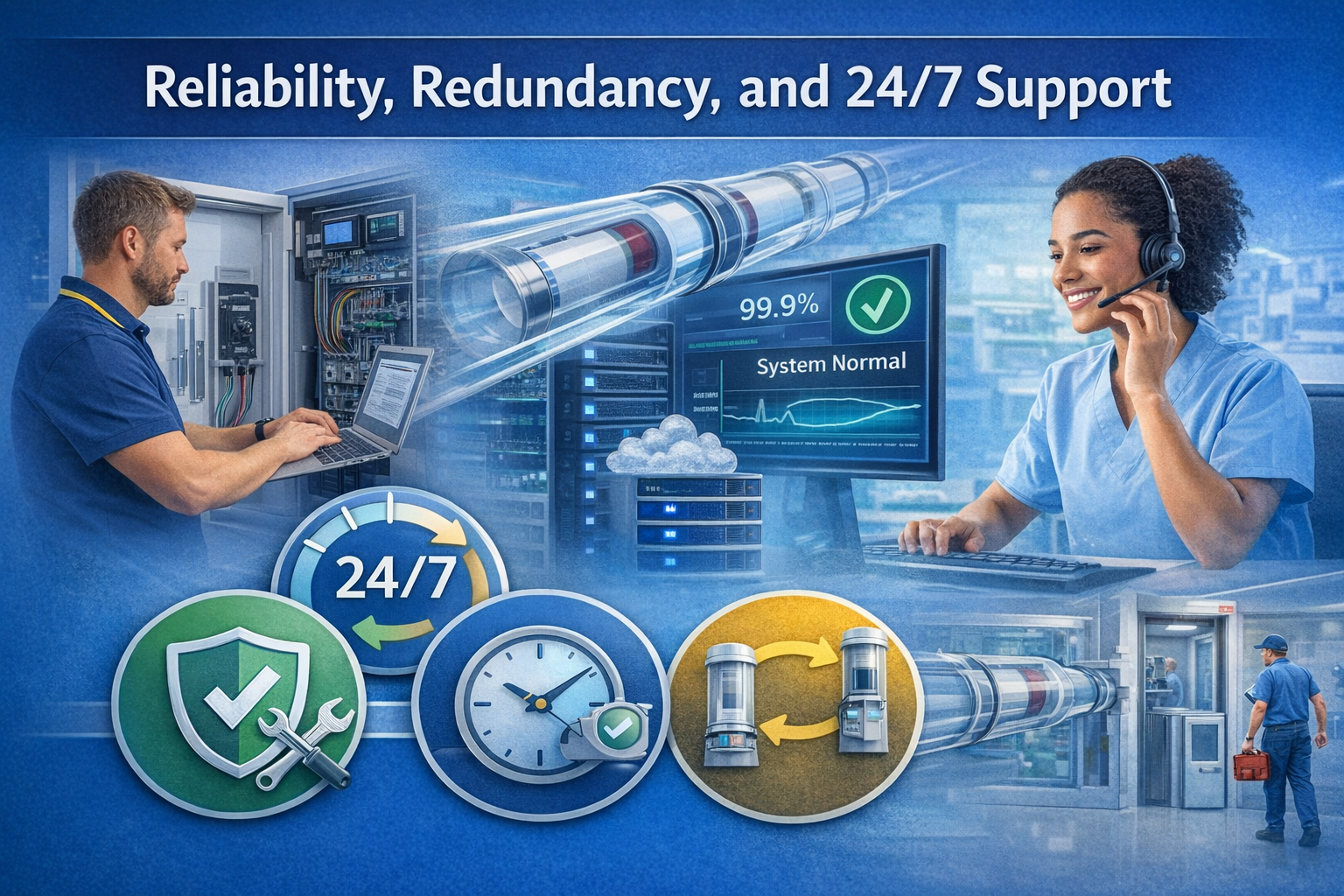
Your RFP should cover:
Expected uptime and service-level commitments
Redundancy options (zones, multiple blowers, alternate routes)
Local service presence and response times
Remote monitoring, alerting, and diagnostics capabilities
Ask vendors:
How do you detect and resolve issues before they impact clinicians?
What are your typical response times for critical failures in similar hospitals?
How do you handle software updates and long-term support?
The goal is not just to install a tube system hospital network, but to keep it reliable enough that staff don't revert to walking "just in case."
Data, Visibility, and Continuous Improvement
Modern pneumatic tube systems for hospitals should not be black boxes.

Include requirements for:
Route- and station-level usage and performance data (volumes, travel times, error rates)
Simple dashboards or reporting tools your team can access
Data export options for integration with BI tools or quality programs
This data lets you:
See where and when the system is being used or underused
Identify congestion points, slow routes, and misaligned priorities
Build and track improvement projects tied to transport and turnaround time
Without this visibility, it's hard to know whether your investment in a hospital pneumatic tube system is delivering expected value.
Partnership, Not Just Product
Finally, consider the nature of the relationship you want with your tube system vendor.
In an RFP, look for:
Willingness to participate in early planning with clinical, operations, and facilities teams
Support for training, change management, and communication with staff
Experience helping other hospitals refine policies and workflows over time (not just at go-live)
References from similar organizations that can speak to both implementation and long-term partnership
You're not just buying hardware. You're choosing a partner who will help your tube system hospital design evolve with new units, new test menus, and new safety requirements.
Atreo's Perspective on Selecting Pneumatic Tube Systems for Hospitals
When selecting pneumatic tube systems for hospitals, focus on how the system will support real clinical workflows, not just equipment specs.
RFPs should address design around care pathways, station placement, safety/validation, integration with lean operations, reliability, and data.
The right hospital pneumatic tube system is one that nurses, lab staff, and pharmacy trust and use every day, not just one that looks efficient on a diagram.
Treat the selection as the start of a long-term partnership, not a one-time purchase.
Next Step: Talk with Atreo About Your Tube System RFP
If you're planning a new tube system hospital project, expanding an existing network, or refreshing an old RFP template, we can help you include the requirements that matter most.
Review your draft requirements for pneumatic tube systems for hospitals
Align design criteria with your clinical pathways, safety needs, and lean goals
Discuss how to evaluate vendors on partnership, not just price and specs
Frequently Asked Questions About Pneumatic Tube System Cost
What should hospitals look for when choosing pneumatic tube systems?
Beyond price and basic specs, hospitals should look for pneumatic tube systems for hospitals that are designed around clinical pathways, have well-thought-out station placement, support safety and pre-analytical validation, provide route-level data, and come with strong service and partnership commitments.
How important is station placement in a tube system hospital design?
Station placement is critical. If stations are far from where nurses draw blood or prepare meds, they won't be used consistently, and the hospital pneumatic tube system will not deliver expected time and labor savings. RFPs should require vendors to plan stations with nurse and lab workflows, not just construction convenience.
How do we ensure a tube system is safe for specimens and blood?
Safety should be part of the RFP. Ask vendors how they support validation of routes and speeds, what packaging and carrier options they provide, and how they help define which items can safely travel via tube. Connect this with your own policies and validation work to protect pre-analytical quality and transfusion safety.
Should facilities teams lead the selection of pneumatic tube systems for hospitals?
Facilities usually leads the project, but the best outcomes come when facilities, operations, lab, pharmacy, nursing, and clinical engineering all participate. The tube system hospital teams will actually use needs to work for everyone, so selection criteria and vendor evaluations should reflect multi-disciplinary input.
